
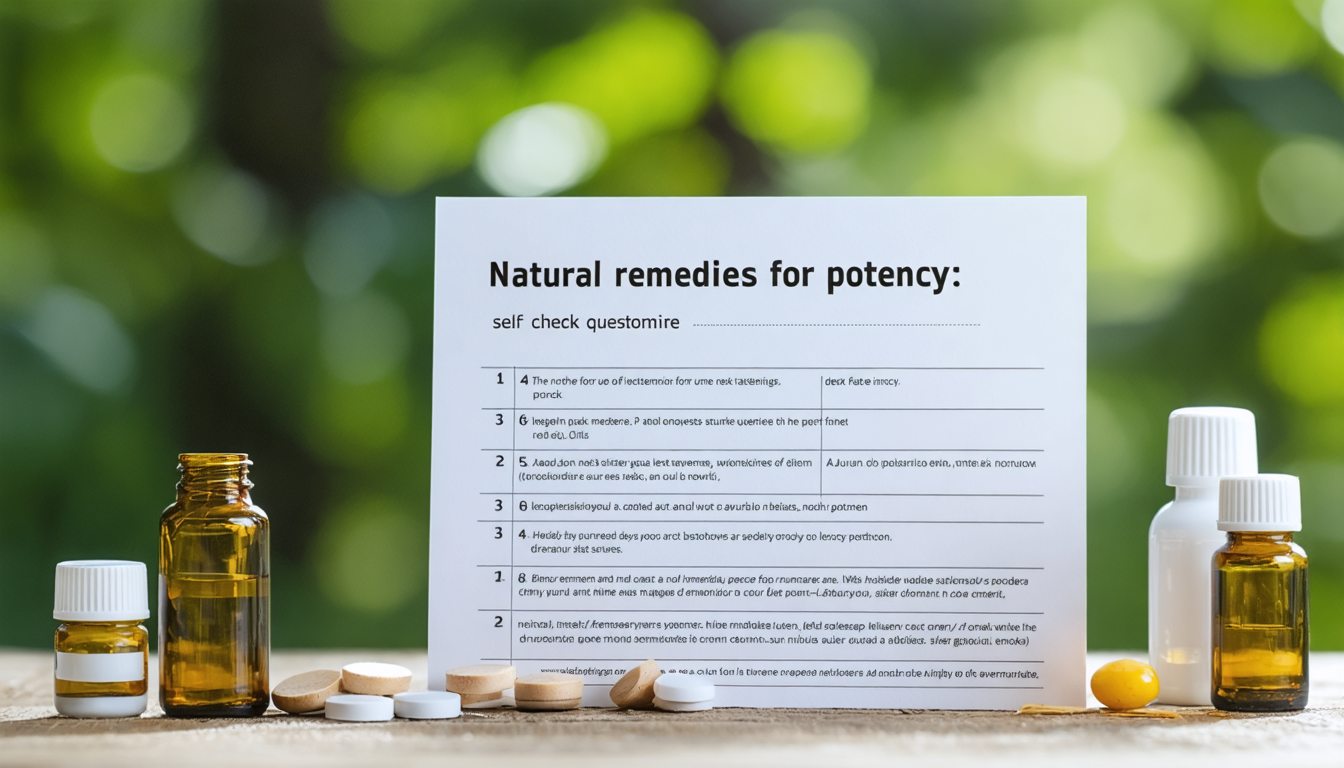
Natural remedies for potency
Disclaimer: This self-check questionnaire is for informational purposes only and does not provide a medical diagnosis. If you have persistent symptoms, pain, or underlying health conditions, consult a qualified healthcare professional.
Interest in natural remedies for potency is growing as more men look for holistic ways to support erectile function, vitality, and overall reproductive health. Lifestyle, stress levels, cardiovascular fitness, hormonal balance, and psychological factors all play a role. Use the checklist below to reflect on possible contributing factors before considering herbal or lifestyle-based approaches.
Questionnaire
Review each question and answer “Yes” or “No” based on your experience over the past 3–6 months:
- Have you noticed difficulty achieving or maintaining an erection sufficient for intercourse?
- Have these changes persisted for more than 3 months?
- Do you experience reduced morning erections compared to the past?
- Have you been under significant stress (work, relationship, financial) recently?
- Do you sleep fewer than 6–7 hours per night on average?
- Do you have a sedentary lifestyle with minimal physical activity?
- Are you overweight or has your waist circumference increased noticeably?
- Do you smoke or use nicotine products?
- Do you consume alcohol more than 3–4 times per week?
- Have you been diagnosed with high blood pressure, diabetes, or high cholesterol?
- Are you currently taking medications (e.g., antidepressants, antihypertensives) that may affect sexual function?
- Do you experience low libido or decreased sexual desire?
- Have you noticed mood changes, fatigue, or symptoms of low testosterone?
- Do you experience anxiety specifically related to sexual performance?
- Have you tried any herbal supplements (e.g., ginseng, maca, L-arginine) without professional guidance?
- Do relationship conflicts or lack of communication affect intimacy?
How to interpret answers
Low reason to seek help:
You answered “Yes” to 1–3 questions, symptoms are occasional, and no major risk factors are present. Lifestyle adjustments and stress reduction may be beneficial, but continue monitoring.
Medium reason to seek help:
You answered “Yes” to 4–7 questions, or symptoms persist for more than 3 months. Consider discussing concerns with a general practitioner or urologist to rule out cardiovascular, metabolic, or hormonal factors.
High reason to seek help:
You answered “Yes” to 8 or more questions, have chronic diseases (e.g., diabetes, hypertension), or experience sudden onset of symptoms. Seek medical advice promptly to assess underlying causes. Erectile difficulties can sometimes signal cardiovascular risk.
This interpretation does not confirm any diagnosis. It is a structured reflection tool to help you decide whether lifestyle-based strategies alone are appropriate or whether medical evaluation is advisable.
Next steps: what to do
- Track symptoms: Record frequency, severity, and possible triggers (stress, fatigue, alcohol).
- Monitor lifestyle factors: Note sleep duration, exercise habits, and dietary patterns.
- Improve cardiovascular health: Aim for 150 minutes of moderate activity per week.
- Review supplements carefully: Discuss herbs such as Panax ginseng or L-arginine with a professional before use.
- Consult the right specialist: Start with a general practitioner; consider a urologist or endocrinologist if hormonal imbalance is suspected.
- Prepare questions: Ask about hormone testing, cardiovascular screening, medication side effects, and safe integrative approaches.
- Use reliable resources: Explore our Allgemein health overview, structured Programm for lifestyle optimization, or browse category 1 – men’s health fundamentals for broader guidance.
Natural approaches often discussed
While evidence varies, commonly explored natural strategies include:
- Regular aerobic and resistance training
- Mediterranean-style diet rich in vegetables, olive oil, nuts, and fish
- Weight management
- Stress reduction techniques (mindfulness, breathing exercises)
- Evidence-informed herbal extracts (e.g., standardized ginseng)
- Addressing sleep disorders such as sleep apnea
Situation → urgency → action
| Situation | Urgency | Action |
|---|---|---|
| Occasional difficulty during stressful periods | Low | Stress management, sleep optimization, monitor for 4–6 weeks |
| Persistent symptoms >3 months | Medium | Schedule GP visit, basic blood tests (glucose, lipids, testosterone) |
| Known diabetes or heart disease + erectile changes | High | Prompt medical review; cardiovascular risk assessment |
| Sudden onset with pain or deformity | High | Seek immediate medical care |
| Low libido + fatigue | Medium | Discuss hormonal evaluation with physician |
FAQ
1. Are natural remedies for potency effective?
Some lifestyle interventions—especially exercise and weight loss—have strong evidence. Herbal supplements show mixed results and should be used cautiously.
2. How long does it take to see improvement?
Lifestyle changes may show benefits within 4–12 weeks, depending on consistency and underlying causes.
3. Can stress alone cause erectile problems?
Yes. Psychological stress and performance anxiety can significantly affect sexual function.
4. Is low testosterone always the cause?
No. Hormonal imbalance is only one of several possible contributors.
5. Are supplements safe?
Not always. Some over-the-counter products may interact with medications or contain undeclared ingredients.
6. Should I avoid medication and rely only on natural methods?
Not necessarily. An integrative approach—medical guidance combined with lifestyle optimization—often provides the best outcomes.
7. Can diet really improve erectile function?
Yes. Diets that support vascular health can positively influence blood flow, which is essential for erection quality.
8. When is it urgent to see a doctor?
If symptoms are sudden, severe, associated with pain, or occur alongside cardiovascular disease risk factors.
Sources
- European Association of Urology (EAU) Guidelines on Sexual and Reproductive Health.
- American Urological Association (AUA) Guidelines on Erectile Dysfunction.
- National Institutes of Health (NIH) – Erectile Dysfunction Overview.
- World Health Organization (WHO) – Cardiovascular risk factors and lifestyle guidance.
Comments are closed